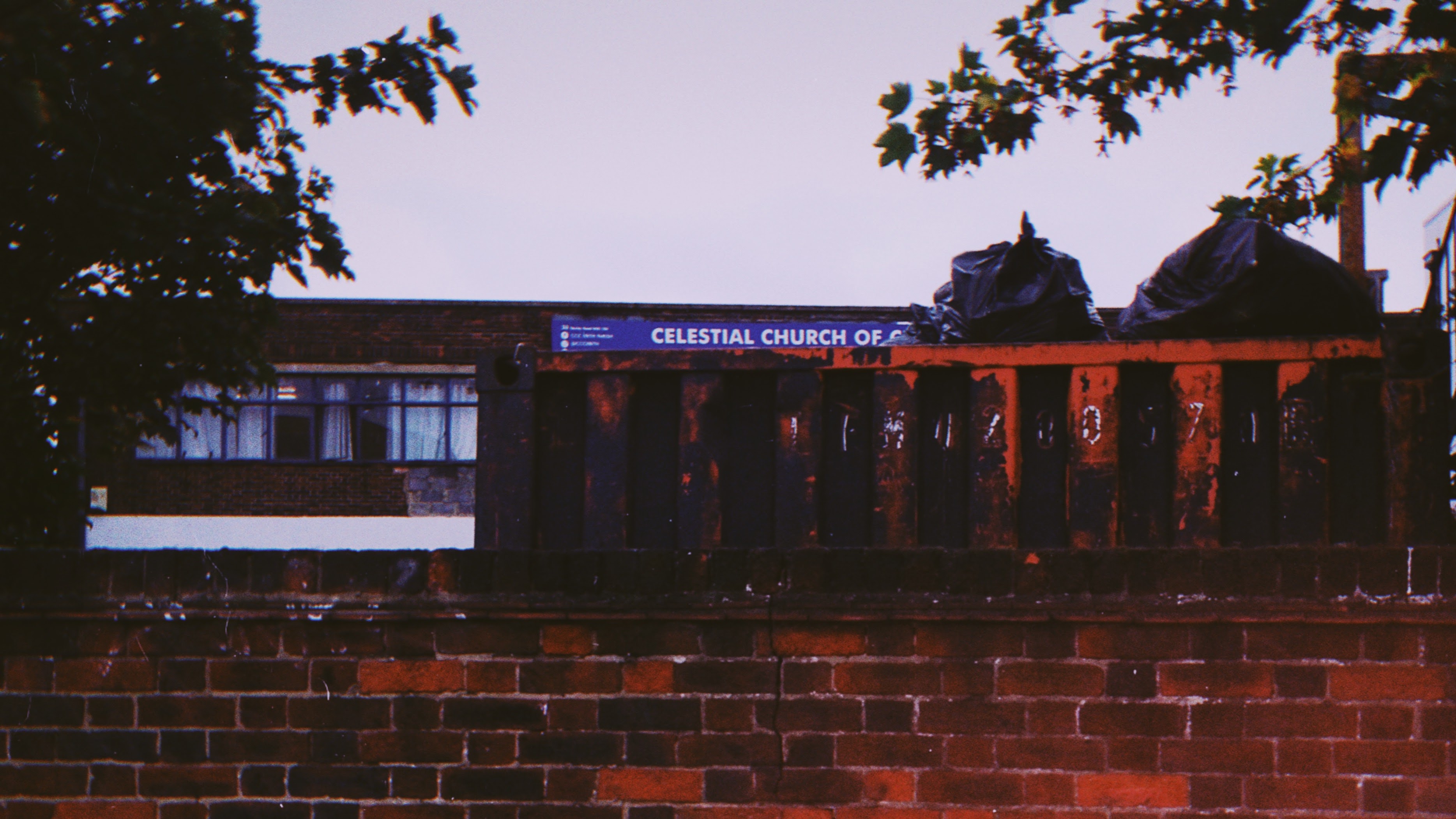
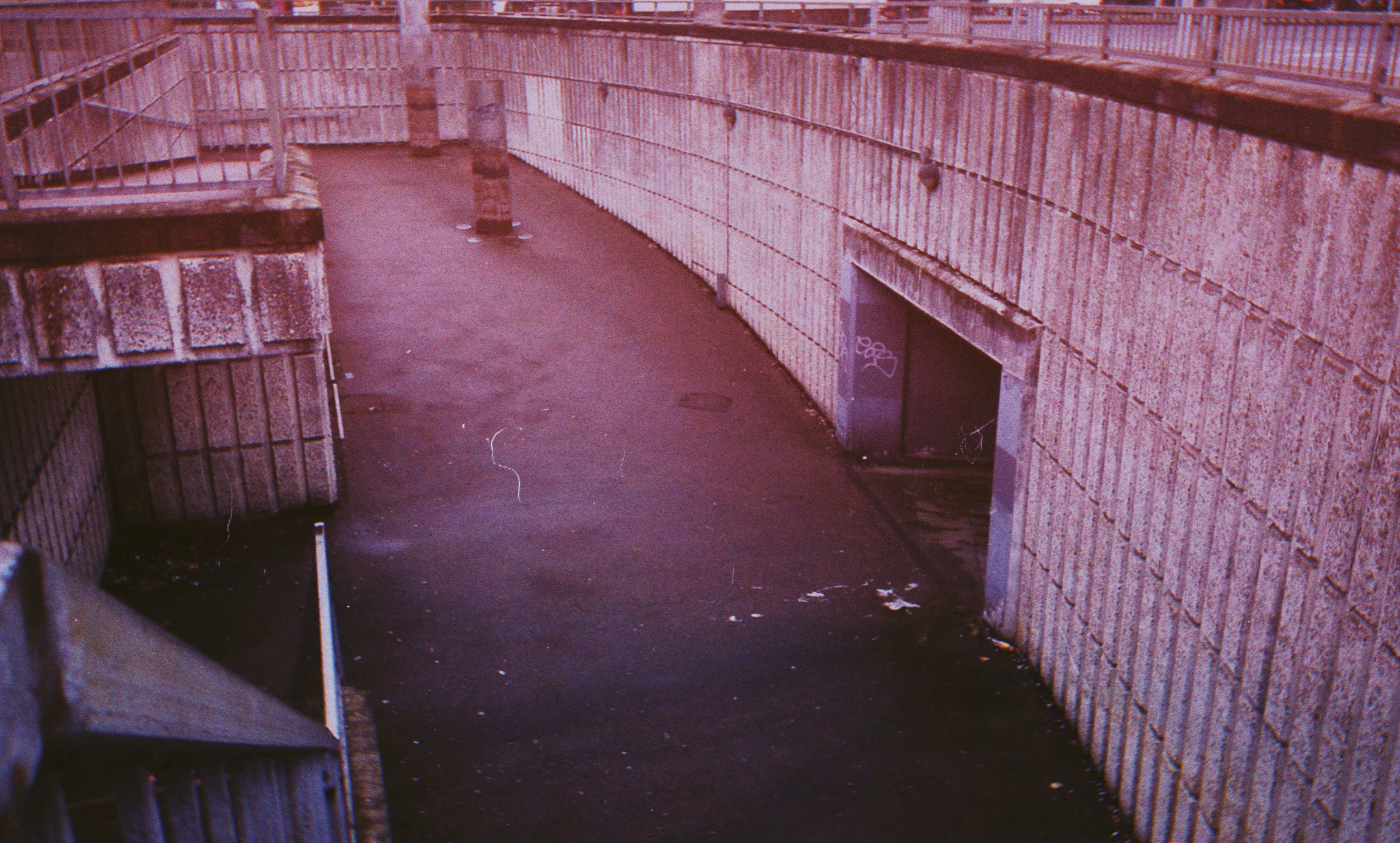
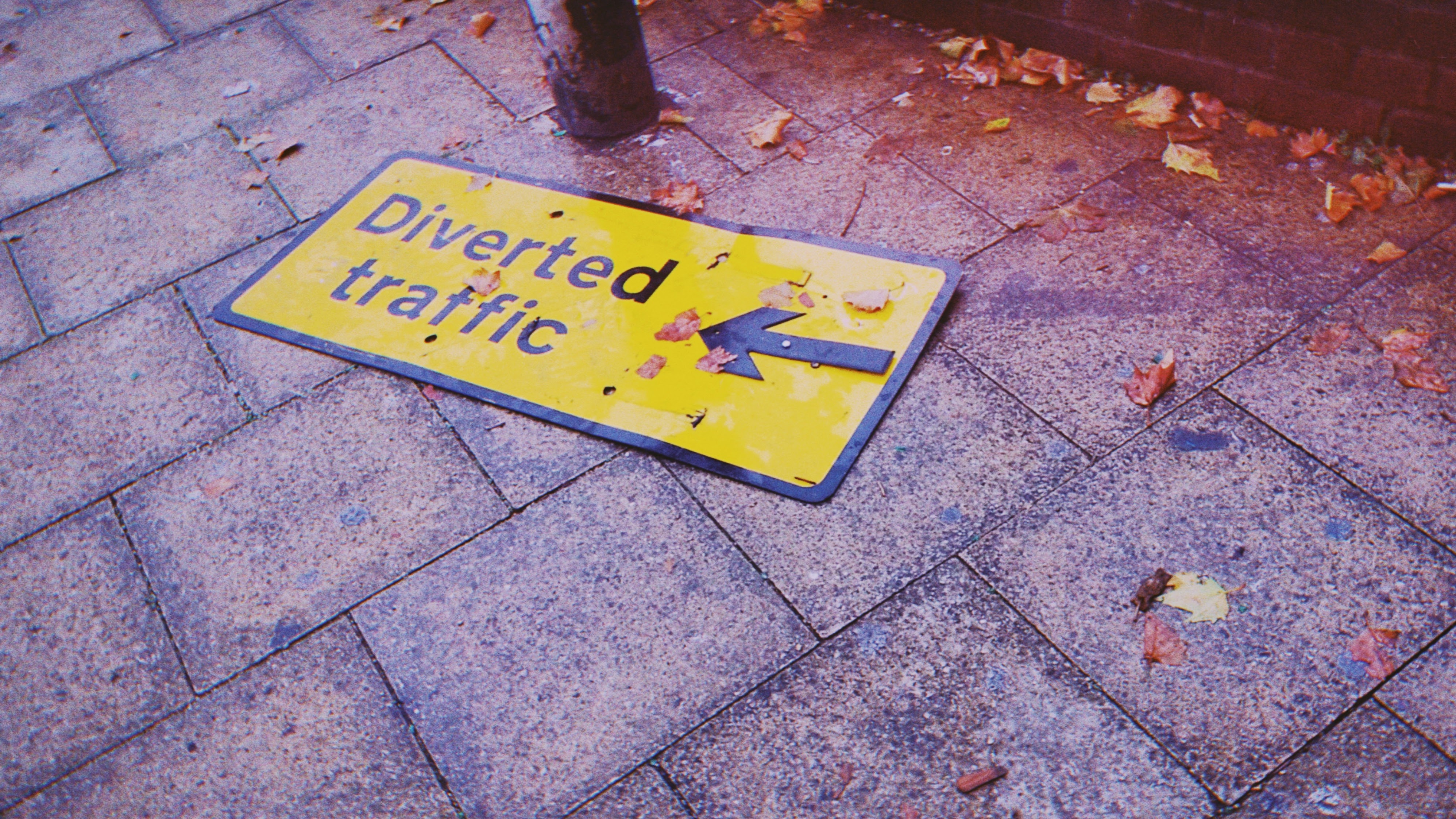
I had some time to kill waiting for a bus and so had a little play with the Nomo Cam app. The app replicates old camera styles and I stuck to one of the free ones on offer, that essentially has the look and feel of an old disposable film camera.
There’s a double nostalgia to these kinds of apps and these kinds of photos. They look like old photos, so they jog a memory there. And I think they also, more directly, look like a memory – slightly blurred, ill-focused but still familiar. Or perhaps I have been so influenced by photographs taken on cheap film cameras as a primary document of my past that my brain has rewired itself to see all memories that way, or at least recognise these kinds of photos as a kind of memory?
I feel like all of this then influences the kinds of shots to take with this kind of app (or this kind of film, if you still have it). It seems to make sense to take photos of scenes that are relatively timeless, or of things that were about when these kinds of cameras were popular. It is almost like recreating the past. A more modern scene would be jarring, awkward…although maybe it would be an interesting exercise to see that kind of juxtaposition between old tech and new subject, to see if they play off each other in interesting ways, or just look like a corny Instagram filter.
I couldn’t properly see my screen when taking the photos, as the light reflected off it. This was initially frustrating, but then I thought it was entirely apt. You would have to wait to get the film developed in the past, and so only really seeing my photos once I was home felt like a sped-up version of that. I stopped overthinking what I was doing. I could also tidy up the shots later.
I enjoy these kinds of apps as I’m no great photographer and my phone camera is even worse. And these kinds of things help me to create something novel despite those limitations. It’s a great way to create something quickly, and to then contemplate the act of creation more generally – that art is so often a consequence of its tools and its context.
Last week and I was in a pub in Central London and it was packed. It was packed, but it wasn’t busy, which I appreciate probably doesn’t make much sense. There weren’t that many people there, especially for the Thursday night after-work drink slot. There were empty tables. There was room outside to enjoy the early Autumn evening sunshine. Back at the bar it was packed, uncomfortably so.
There were plenty of staff, but there were loads of people crammed around the bar. It was hard enough to navigate past, let alone to get a drink. And those who were successful getting served were then faced with a mass of humanity to navigate past with their drinks. It didn’t seem the ideal set-up.
Meanwhile, I’ve noticed this year that there’s been lots of grumbling around people queuing in pubs. Pubs and breweries are closing, the economy is making a night out a luxury rather than a routine, and yet people lining up for a drink appears to raise far more ire amongst a certain kind of pub-goer.
But…dare I say it…I think queues in pubs are fine…and sometimes even good?
I’m not quite sure why queues are such an issue. They can be annoying if they wind around seating areas, but then a scrum at the bar can be just as irritating and intrusive. A long bar might be wasted with a queue, but not if there’s only one or two bar staff working behind it. Crowd control is part of the art of running a pub, and a queue can work just as as well as anything else. If people like going to the bar (as opposed to getting table service) then surely their main focus is on getting them served as quickly as possible, rather than focusing on the formation in which they stand?
Queues guarantee that people are served in the order they arrived. As much as staff should be able to clock who is next, they have enough to do without keeping tabs on that. There are the bar-blockers who think that if they are standing at the bar then that means they should be served-on-demand no matter who else is waiting. There are the entitled regulars who think they have a fast pass to their usual. Then there are just the confident, the tall and the selfish. It is an unnecessary minefield for staff and drinkers alike.
Ultimately, I can see queues as a helpful tool, especially during busy periods, as the reality is many people will just not behave in pubs, and the current system benefits some people more than others. Pubs should be spaces for all, not just for those more able to navigate them.
In many pubs if you are white, male, able-bodied and known by the staff you have a significantly better chance of getting served than if you are none of those things. And considering pubs have traditionally not exactly been the most welcoming of places to those who aren’t white, male and able-bodied and are closing at a rapidly escalating rate you would think it would be in their interests (and in the interests of all pub regulars) to make it easier for the widest possible demographic to actually spend money in a pub.
My suspicion is the most vehement opponents of pub queues have simply never had an issue getting served themselves. And perhaps they might benefit from showing some empathy towards the kinds of people who regularly find it difficult, either getting jostled out the way, or overlooked by bar staff, or simply feeling uncomfortable in that kind of environment.
Pubs can be intimidating places, and getting served can be a big part of that. Some of the biggest issues I’ve had in pubs have involved people getting aggressive at the bar over who should be served next, or encountering problems from all the pushing and shoving on the way to and from the bar. I’m fortunate enough to feel reasonably comfortable handling all that, but I wouldn’t expect everyone to be.
Pubs need to adapt, and if the current system isn’t working then people will adapt themselves – most queues are spontaneous, not mandated. The economics of drinking mean a trip to the pub is more of a financial commitment than it has ever been. And if people are having to fight their way to pay a premium for a pint, they will soon look elsewhere to spend their hard-earned and rapidly diminishing cash.
The queue is egalitarian and deeply British. It’s not the answer in every pub. But in many pubs it just might be.
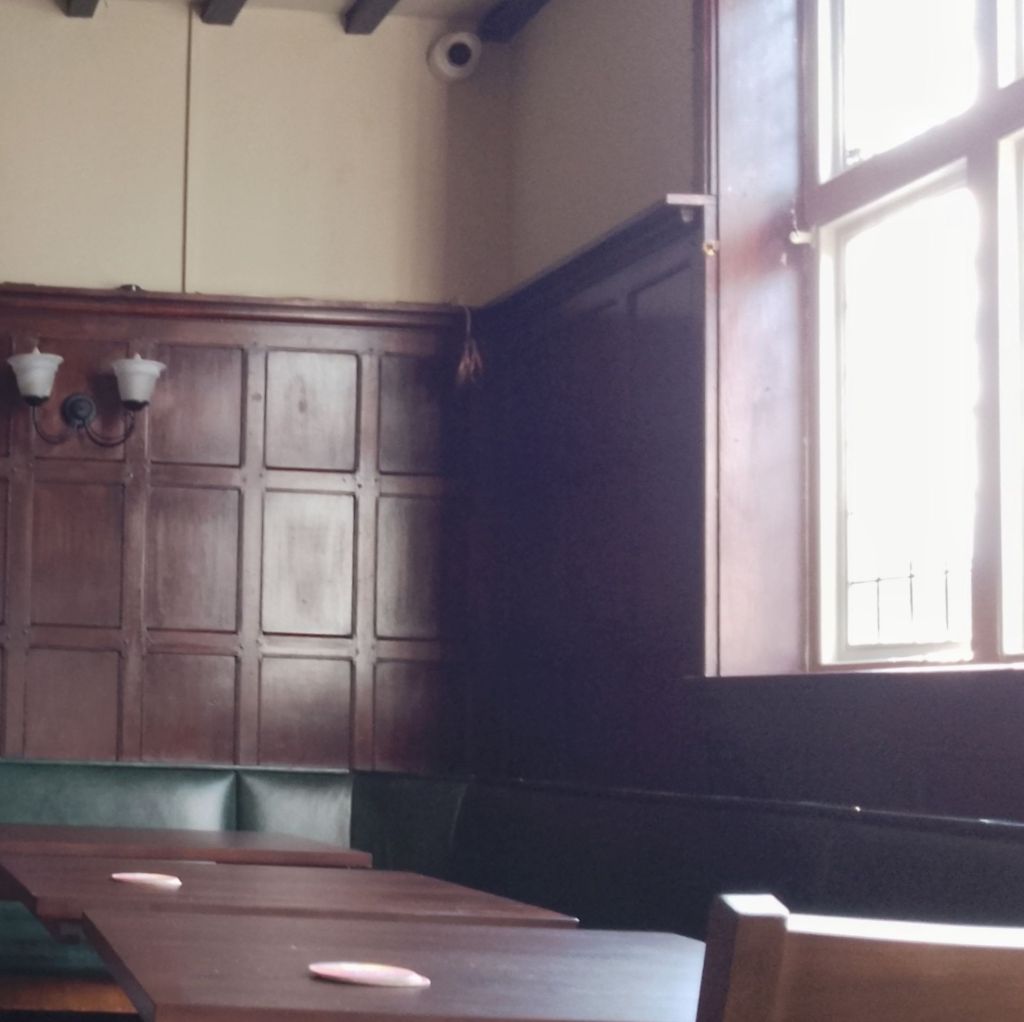
Corner of Royal Oak pub, tables leading up to wood panelled wall and a window with sunlight beaming in
It’s the hope that kills you.
I recently wrote about the Royal Oak at Northumberland Heath and how through a change in management and a recent refurbishment it was becoming quite a special place.
Yesterday the person behind that transformation, Hazel Southwell, revealed that the owners had relieved her of her duties.
Hazel is clearly a good person as well as an exceptional pub manager. Hazel and her team have done so much to turn the pub around from a tired old building catering primarily to a couple of dozen regulars to a smart, welcoming place for both everyone in the area and those from further afield looking for an example of how traditional pubs can still work today. This is a place that a year ago most locals wouldn’t dream of stepping in and now it is somewhere many are eager to visit.
We need pubs to be community assets, and for that to happen we need people willing to welcome all communities to their pubs, not just a chosen few. Hazel was well on the way to achieving that. If anything, she deserved a promotion, not to be shown the door.
I’m not sure I want to give my money to a business that treats it’s employees this way. And I’m not sure the pub will be the same without the person who has steered it on such a promising course.
When it comes to pubs and their survival there is often quite a lot of talk about the beer and the buildings, but I don’t think there is enough acknowledgement of how important people are to the equation too. Good pubs have good people running them and good people working within them. And those people help cultivate an environment that attracts good patrons too. Pub management and pub staff aren’t just interchangeable. You change the people, you change the pub.
The hospitality business stands or falls on its staff, and it’s about time it addressed the precarity within the industry. It’s simply not good enough.
Selfishly, I hope the company behind the Royal Oak sees sense and changes their minds. At best it is a thoroughly bemusing business decision, and at worst it is a completely destructive one.
Beyond that, I hope Hazel gets a job where her talents are appreciated. She would be an asset to any pub, or indeed any business, looking to widen its appeal.
I like to try to make at least one FA Cup game each season. I find it amazing that we still have a tournament where the smallest clubs in the country are in the same competition as some of the biggest clubs in the world.
Early qualifying rounds are a chance to feel part of something bigger – genuinely you are on the Road to Wembley. You are witnessing a small part of a much larger story, one that will play out over a whole season. Some people choose to follow the competition round-by-round picking a team at the start to watch and then following the winner of each fixture they see, right up to the final.
For all that, it does feel a little peculiar that the non-league season starts with a glut of cup fixtures, at least for those lucky enough to progress, a fun run of games to have for sure, but a mixed blessing for any team looking to make a good start in the league.
And this game was not just about the magic of the FA Cup but was also a chance to see two teams in the same division face off and to see they might progress, or otherwise, this season.
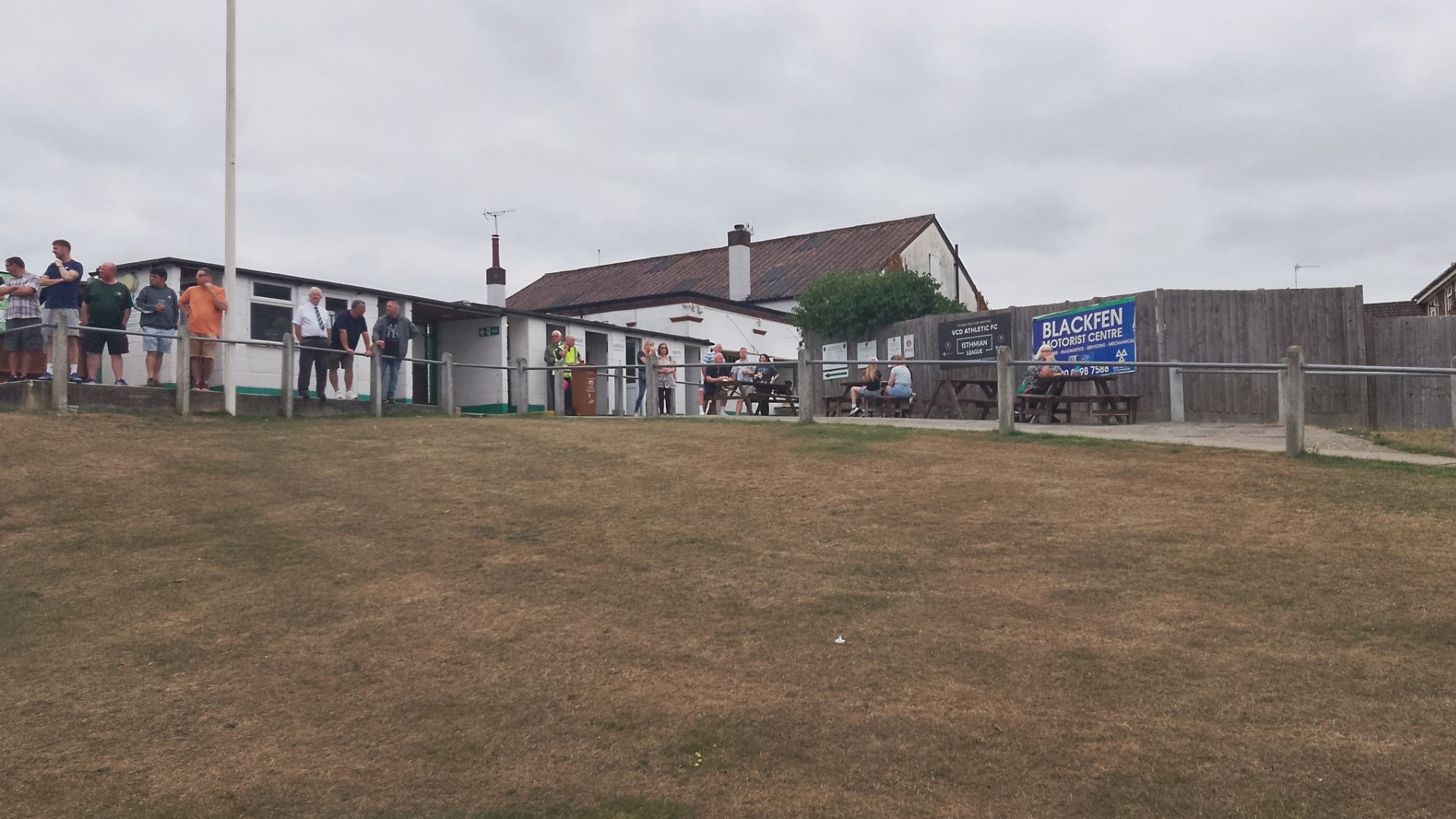
VCD have a great ground, as you enter you pass a bowls green and a tennis club, a reminder that this was once a much larger sports ground for local munitions workers. The footballers still change in something that looks suspiciously like a cricket pavilion. The clubhouse feels like a proper clubhouse, a pubby feel, not too bright, with trophies, old team photos and a league ladder adorning the walls, along with the obligatory dartboard, pool table and Sky Sports screens. Some clubhouses can feel a little cold, with bright white walls and too bright lighting, more like a leisure centre lobby than a place to anticipate a win or commiserate a loss. Yet VCD’s clubhouse gets it right, it is homely, lived in.
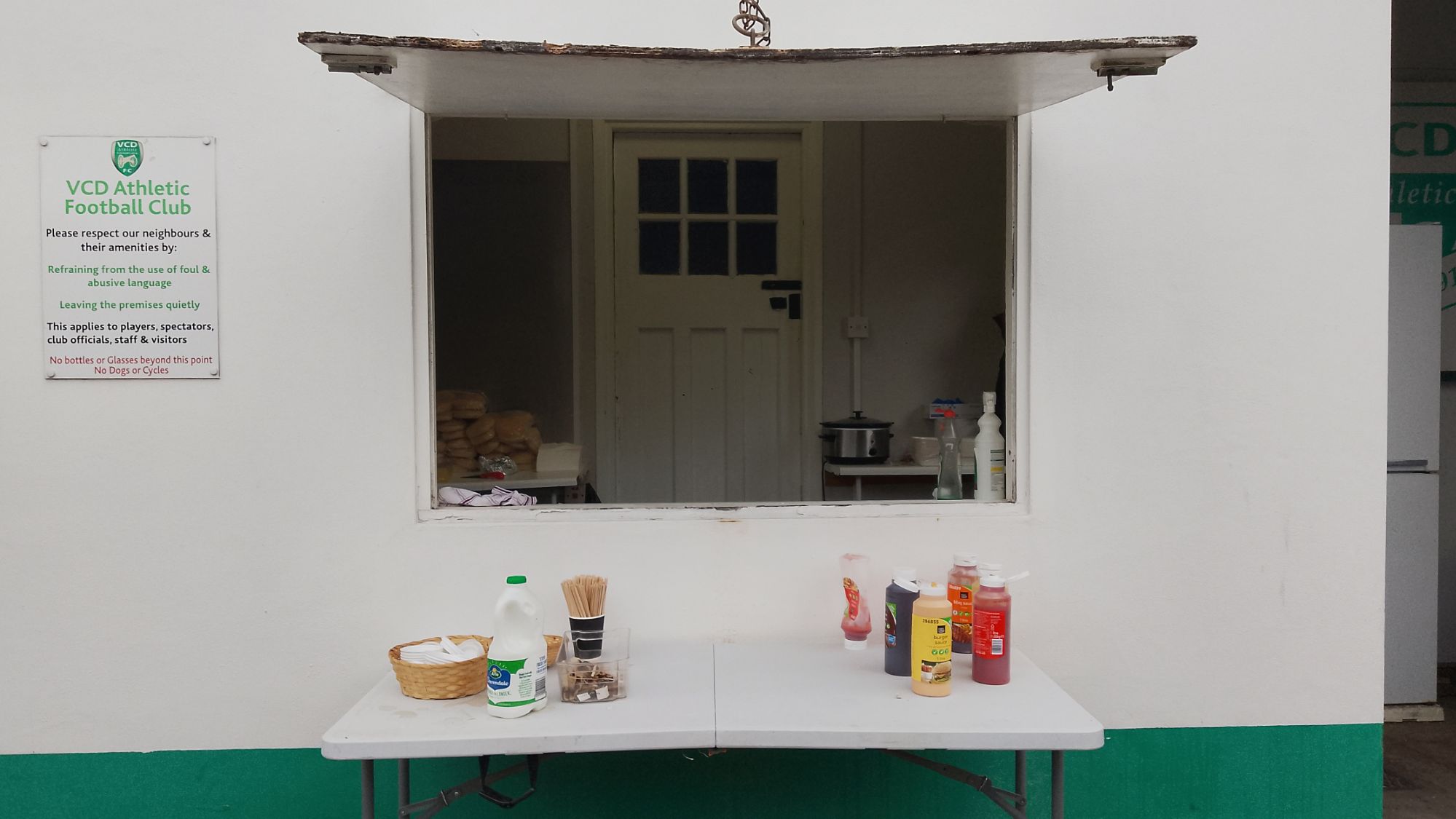
Once you pass through the turnstiles, if you can resist the tea bar, you are led down a slope to pitchside, and there’s something really pleasing about how the pitch opens up to you like that at the bottom of the hill. There’s a stand on one side, and then roofed standing all alongside the other side – a great place to watch football as you are sheltered from the elements and the low roof magnifies the sound too. All of these features help hem in the ground on what is a pretty large piece of land, enclosing it in a way that helps give the place some focus and identity.
On to the game itself, and Sittingbourne would have considered themselves very unlucky not to win, but VCD certainly battled well to stay in the game the way they did. A penalty after 15 seconds was a hell of a start for Sittingbourne, as most of the crowd were still filing into the ground and milling around the tea bar. However, Frankie Leonard made a tremendous save to keep it out, followed up by an equally good reaction save from the rebound. Sittingbourne would go on to hit the woodwork three times and miss another penalty before Ellis Brown finally put them in front late in the game.
Sittingbourne look like they could be a force to contend with in the league this year, strong, focused and able to attack on the break at pace. There were moments where it felt like they and their supporters were getting frustrated at not being ahead. And I felt that in some ways gave VCD some hope that they could get something out of a game they were still in with a shout of winning. There’s that certain kind of promise from hearing an opponent getting increasingly exasperated despite being on top, that maybe they are focused too much on perceived injustices rather than the game at hand and might soon have something to be genuinely fed up about.
That VCD were able to stay in the game and frustrate Sittingbourne for so long is an encouraging sign for them. They play good football, are coached well and seem to have got a good balance between maintaining some continuity by retaining their core squad and recruiting the kind of quality players who will offer something new. If they can build on the determination and skill they showed in patches in this game they could surprise a few people this season. They just need a little more consistency and concentration over the 90 minutes.
So, the game ended 1-0, a fair result, but I can also imagine both dressing rooms might have spent some time contemplating if they should have got more from the game – that Sittingbourne should have put away their chances, and VCD should have maybe tightened things up more at the back and could have nicked something at the end. But it was a good day’s football, and a proper FA Cup tie. Now, to concentrate on the league…
I miss record shops. I remember many happy Saturday afternoons working my way through all the local places, trawling their bargain bins and hoping something wonderful would appear. Now and then I’d make my way up town and work my way along Berwick Street’s record shops before taking on the giant Tower Records and HMV.
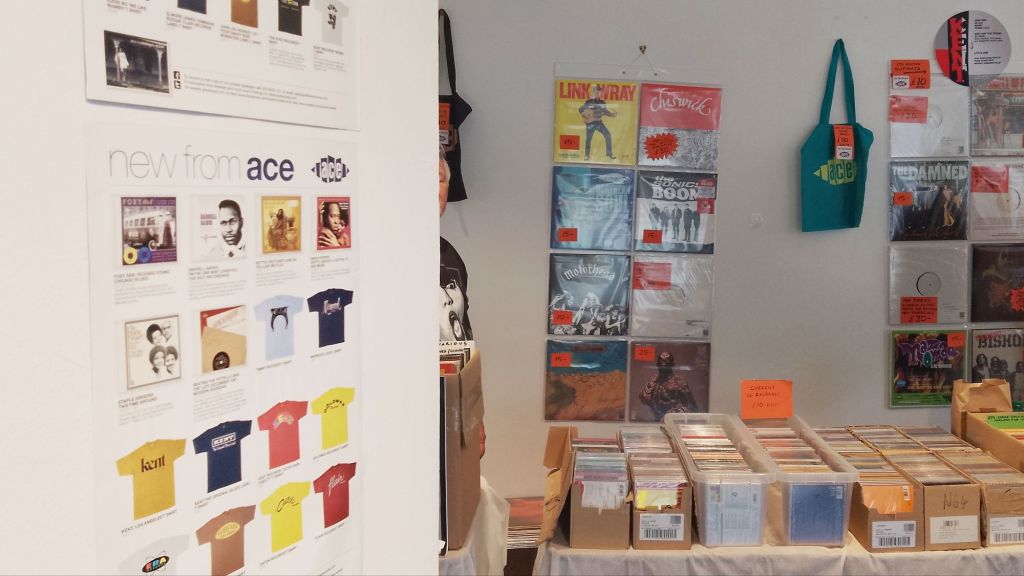
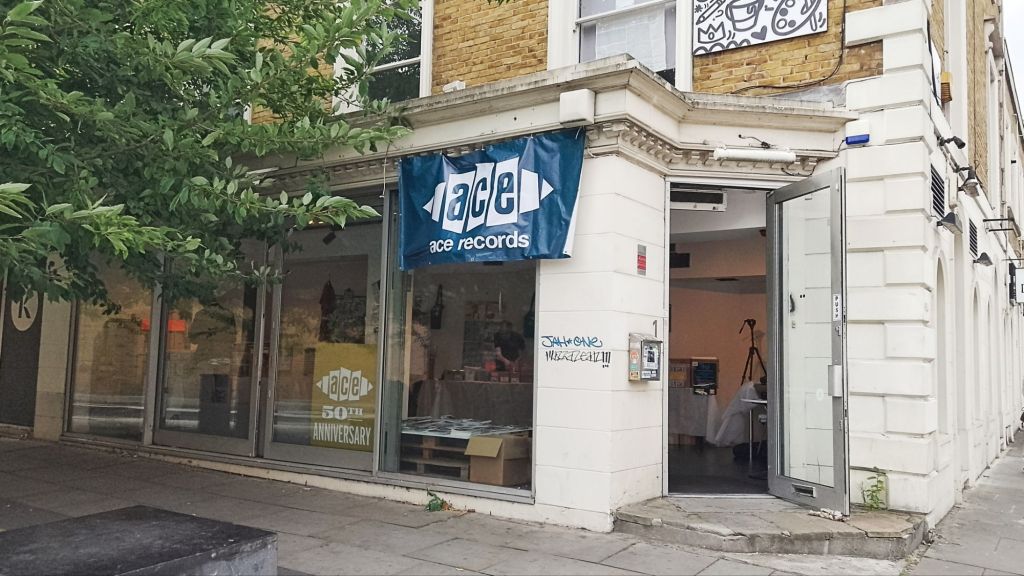
Obviously record shops still exist, it’s just there are far fewer of them. So when I have the opportunity to root through some records and CDs, I take it. Ace Records’ pop-up shop at Chalk Farm offered one of those opportunities. As part of their 50th birthday celebrations they have taken over an empty shop for a few days and filled it with much of their extensive back catalogue, predominantly of reissues of rare and previously unheralded tracks, along with some real rarities from their collection, including test pressings, along with some fun merchandise. There was loads of great stuff, and all reasonably priced too.
As much as it would be great to have a permanent physical home for Ace Records, a pop-up is a pretty good second best. I think it is something plenty of other labels could try. Last year Numero Group had a similar pop-up shop in London that was brilliant. There’s something quite special about being able to immerse yourself in a label’s back catalogue for a while.
I particularly enjoyed overhearing the conversations between staff and customers. I think I know a fair bit about music, but I was in the presence of people who have forgotten more than I have ever known, who were clearly enjoying finding a venue where they could actually use their esoteric knowledge in a social setting. Funny how in just a few minutes you can hear about obscure old producers, the best record cutting services, upcoming gigs and major beefs amongst record collectors (something I didn’t even realise was a thing!). Record shop spaces can feel intimidating sometimes, but they can also be fascinating and very funny, intentionally or not.
On my way back I thought about what I see as The Collector Impulse – an impression that some people gain more fun in collecting (and hoarding) than in the actual thing itself. The thrill is in the chase beyond anything else. I see it sometimes in those people snapping up rare beer releases, or seeing how many football grounds they can visit, or…collecting rare records.
And then I thought how Ace Records, as a reissue label, is the antithesis of that impulse – they haven’t just collected, they have shared – and there is so much more wonderful music out there and easy to access because of their work. These songs aren’t lost, or lingering in a handful of private collections, but are back out there in the world enjoying a second life. It is a democratisation of music, bringing it to everyone, not just those with the time and budget to uncover lost classics. And that’s a very, very good thing.
The pop-up shop is open until Sunday, at 1 Adelaide Road, NW3 3QE, across the road from Chalk Farm tube station.







 Wait until next year