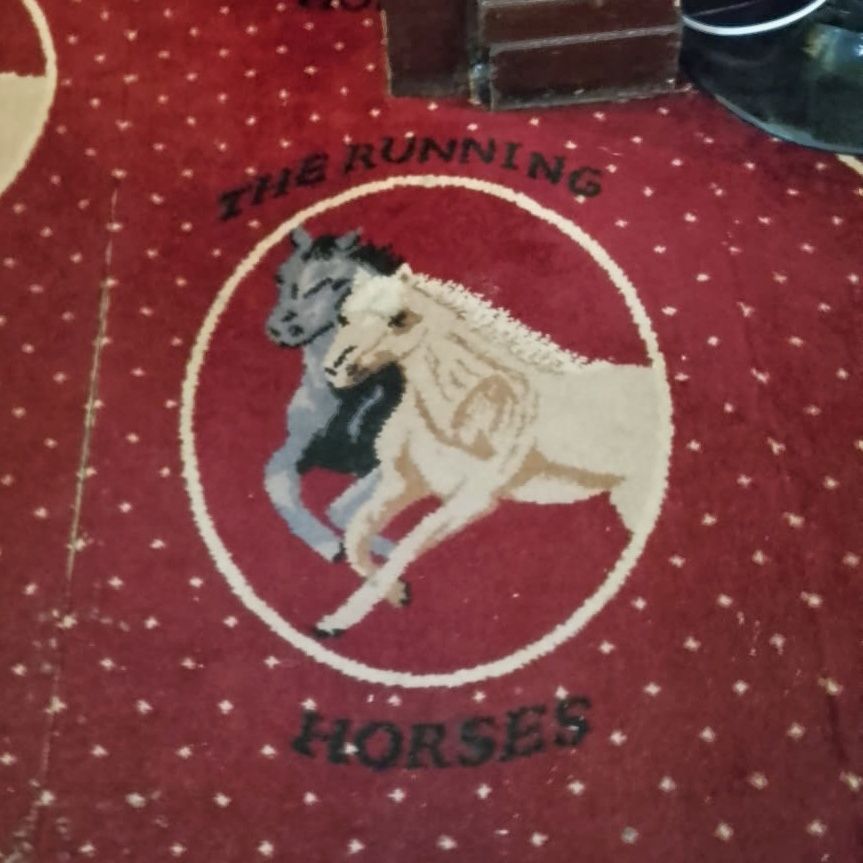
A very swift half in the Running Horses, Erith. If you were to flick through local history books you would see that Erith once had many pubs in its town centre. Now it only has one. The Running Horses is a rather large and rather handsome 1930s building, overlooking the Thames. The Saloon bar is lovely, with what looks to be the original features, but is generally closed. The public bar is a fair bit more lived in, a reflection perhaps of it taking all the passing pub traffic alone.
I like a pub with a bit of history and a bit of a mythology. Places with a tale to tell, and a tale you can tell yourself when they are mentioned. There’s apparently been a pub on this spot for over 200 years. After its rebuild in the 1930s it was bombed in 1940 – killing the licensee Zachariah William Coles, an ancestor of comedian and Celebrity Traitors winner Alan Carr. There are tales of many years ago the upstairs holding a party and the floor collapsing onto the drinkers below. If you were to mention the pub to anyone local of a certain age they will more than likely tell you all about how popular the pub’s carvery was in the 70s and 80s, how it was the place everyone went on a Sunday afternoon.
The carvery appears to be back, although it doesn’t seem to be as popular as it once was. There are a few people having a drink waiting for it to open. A few others are playing pool. The Winter Olympics is on the telly. We don’t stay long, but there’s a lot to be said for pubs in town centres, where you not only grab a drink but rest your legs, use the loo, escape the shops for a bit. Pubs can, and perhaps should, be a refuge. And when they are they weave themselves into the fabric of the community. They don’t have to be a destination, just a stopping point on the way.
All of this made me think that sometimes we underappreciate pubs as pitstops. They don’t always have to be destinations in and of themselves. We don’t always need to settle in for a session. Sometimes pubs work best as somewhere for a brief reprieve from the outside world before you pop on your coat and brave the big bad world again.
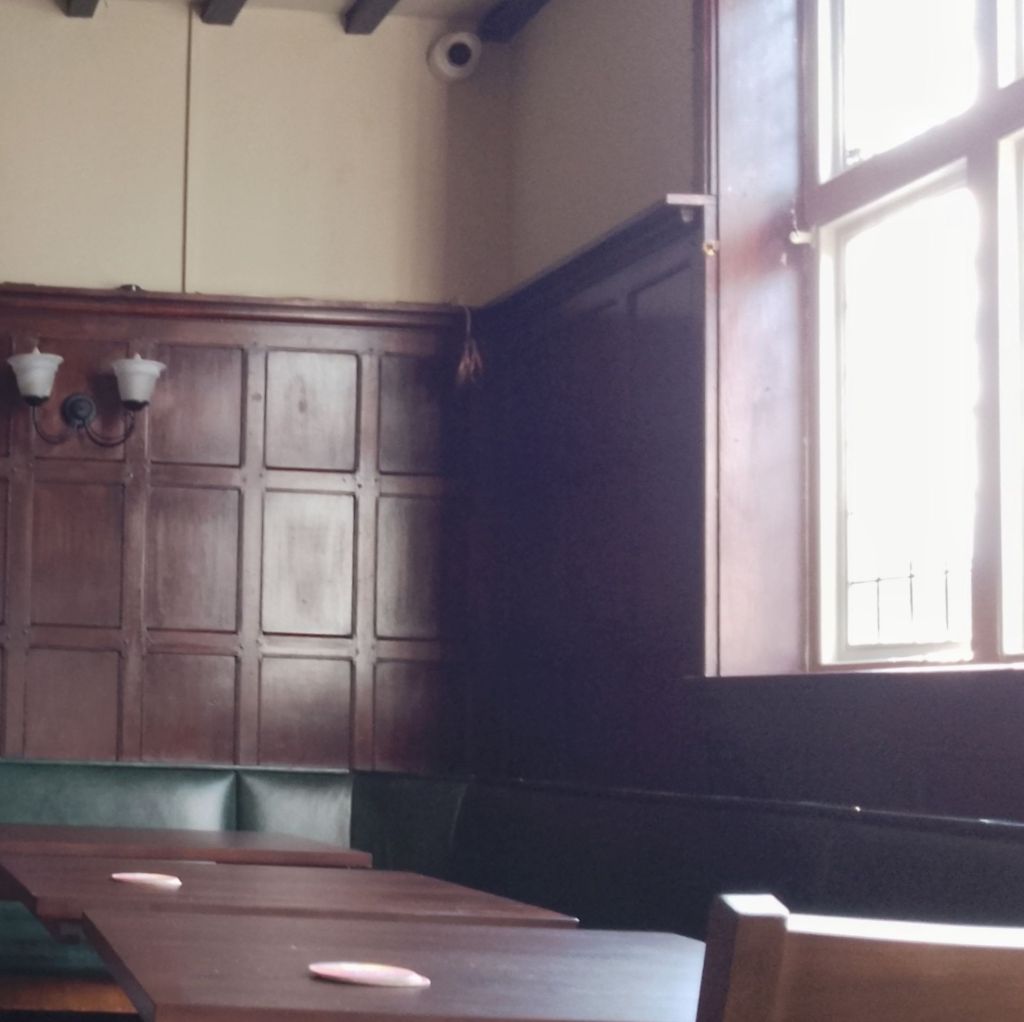
Corner of Royal Oak pub, tables leading up to wood panelled wall and a window with sunlight beaming in
It’s the hope that kills you.
I recently wrote about the Royal Oak at Northumberland Heath and how through a change in management and a recent refurbishment it was becoming quite a special place.
Yesterday the person behind that transformation, Hazel Southwell, revealed that the owners had relieved her of her duties.
Hazel is clearly a good person as well as an exceptional pub manager. Hazel and her team have done so much to turn the pub around from a tired old building catering primarily to a couple of dozen regulars to a smart, welcoming place for both everyone in the area and those from further afield looking for an example of how traditional pubs can still work today. This is a place that a year ago most locals wouldn’t dream of stepping in and now it is somewhere many are eager to visit.
We need pubs to be community assets, and for that to happen we need people willing to welcome all communities to their pubs, not just a chosen few. Hazel was well on the way to achieving that. If anything, she deserved a promotion, not to be shown the door.
I’m not sure I want to give my money to a business that treats it’s employees this way. And I’m not sure the pub will be the same without the person who has steered it on such a promising course.
When it comes to pubs and their survival there is often quite a lot of talk about the beer and the buildings, but I don’t think there is enough acknowledgement of how important people are to the equation too. Good pubs have good people running them and good people working within them. And those people help cultivate an environment that attracts good patrons too. Pub management and pub staff aren’t just interchangeable. You change the people, you change the pub.
The hospitality business stands or falls on its staff, and it’s about time it addressed the precarity within the industry. It’s simply not good enough.
Selfishly, I hope the company behind the Royal Oak sees sense and changes their minds. At best it is a thoroughly bemusing business decision, and at worst it is a completely destructive one.
Beyond that, I hope Hazel gets a job where her talents are appreciated. She would be an asset to any pub, or indeed any business, looking to widen its appeal.
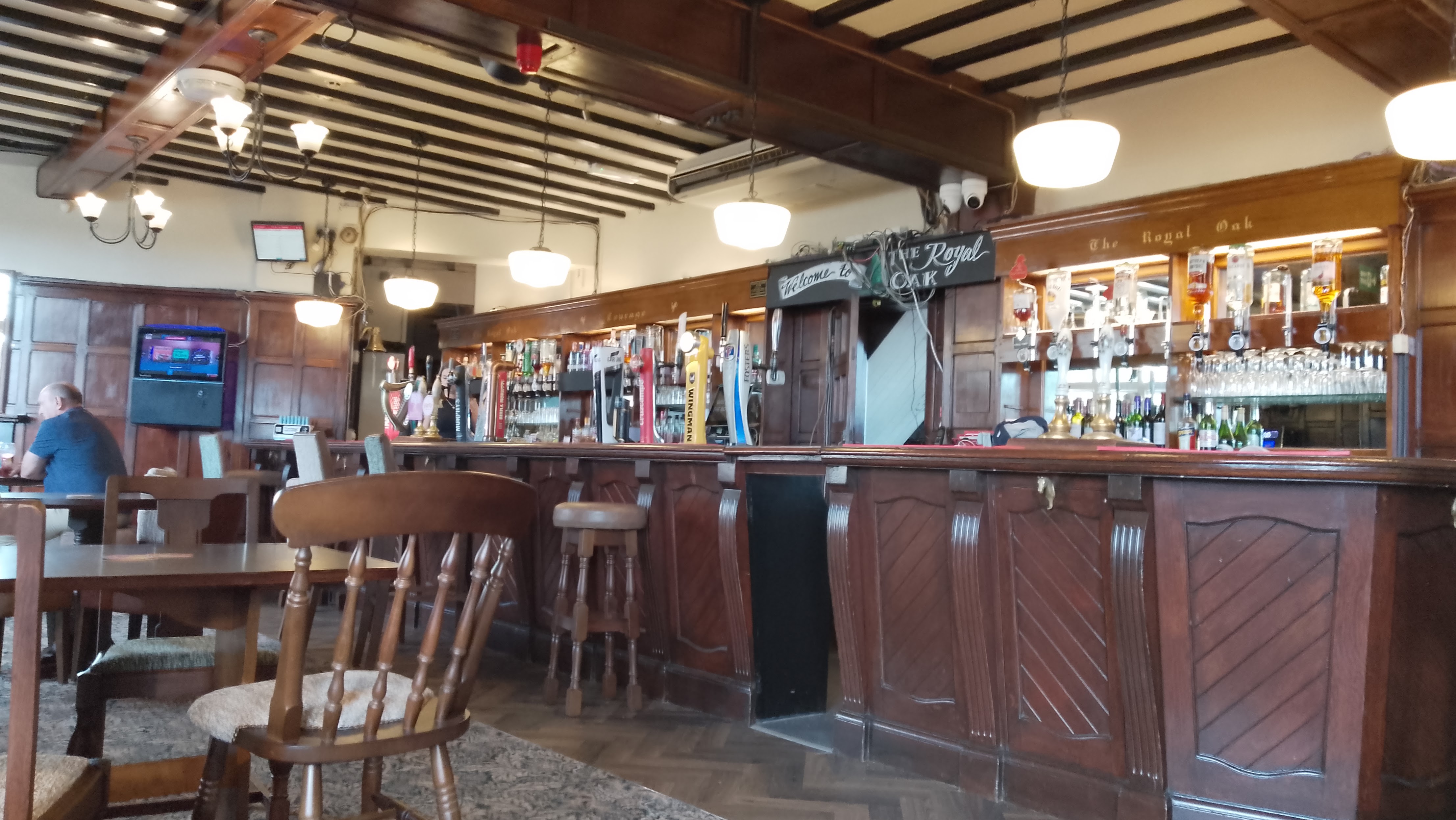
The Royal Oak is massive. It’s local, and that’s important, but the first thing to mention is it’s massive. There are three bars in an age where even two bars is a rarity – The Poolroom Bar, The Bar That Always Has The Racing On, and The Main Bar That’s Out The Back. Well, that’s what I call them, anyway. It’s massive, it’s local, and it’s old. The current building dates to 1930-odd, but there’s been a pub on the site for a lot longer, nobody really knows how long. Pubs are often considered part of the fabric of the community, but this pub really is – it was here when this part of outer London suburbia was literally all fields. You can’t really talk about the history of this part of the world, Northumberland Heath in the Borough of Bexley, without at least giving a nod to the Royal Oak.
So, it’s local. I think you have to situate every pub in its environment. It sits in what many would consider a nondescript part of London, right on the outskirts, certainly far from gentrification, a place sort of in a bind over whether it is actually even in London or really in the neighbouring county of Kent – a recurring subject for some of the most fervent and misguided discussion you’ll ever see on a Local Facebook page (the real answer is “Once was Kent, until London swallowed it up in the mid-1960s”). It is an area that wasn’t particularly well-populated until a century ago, when the builders swooped in and built lots and lots of suburban streets. My view (one I may, or may not, expand on one day) is the whole area is an area of immigrants, and a whole lot better for it. It is just that some people don’t see things how I do, that you can immigrate from Bermondsey just as much as you can from Nigeria or Poland. There aren’t many people who can go back several generations and find their ancestors lived around here. We’re all from somewhere else.
It is also an area where people love a good pub, and that for many years didn’t have many to actually love. A whole lot of old boozers for Locals and Locals Only, a fair few others with shoddy beer, even more shoddily kept, and then a few chain places that were…fine. There was the odd glimpse of What Pubs Can Be – the Robin Hood and Little John in Bexleyheath was, and is, a great pub – a little country pub dropped on a suburban street, a place that had to be excluded from the local CAMRA’s Pub of the Year voting as it kept winning, if I remember rightly.
So, a lot of people who loved pubs, but not many places that deserved that love, until the micropub revolution hit the area. In many ways Bexley was the perfect place for micropubs. The clientele were there, waiting, thirstily. There were plenty of empty shops ideal for conversion. And a wonderful local brewery emerging, Bexley Brewery, to provide the beer for those who wanted to serve something local. Down the road from the Royal Oak is the Bird and Barrel (Bexley’s Brewery’s taproom, essentially, although they serve far more than just their own beers), a genuinely special place and a real community hub. It’s not too far to venture to the Long Haul, the Kentish Belle, the Hackney Carriage, the Door Hinge and more. Bexley suddenly had a whole wealth of good places to drink, places with good beer, good company and welcoming staff. But there was still room for the old pubs to step up.
Old pubs like the Royal Oak. A place that was local, A Local.
I remember stepping in there for the first time way back in the last century, as somewhere identified as a good candidate for an underage pint. I got a Guinness with another lad. Then the rest of the bunch we were with filed in, knowing we’d been served…and just sat down without ordering anything. Rightly, understandably, the barman came over and asked us to leave. I asked him if I could finish my Guinness first and he said Yes. A true gentleman.
Until this year I think I’d only stepped back in there a handful of times. It was massive (had I mentioned that?) and a bit overwhelming. What bar were you meant to go in? Did that heavy door even work? It wasn’t especially welcoming, there wasn’t anything decent to drink and it generally felt like a pub that perhaps wasn’t for me, which was a shame, but fine. There’s always somewhere else to go.
Hazel, the manager, has written brilliantly about the realities of taking a pub on (as an actual proper journalist, that is no surprise, but it feels like a real luxury having someone so eloquent covering this kind of subject matter – a proper peek behind the curtain of what it really means to run a pub). And popping in from time to time over the last few months it has been clear that the pub is really changing for the better – a more welcoming place, with much better beer (cask back on, and good cask, well kept!), yet still true to its roots as a massive, local (capital L-Local?) pub.
It’s easy to pop into a tired pub and say it has potential, but Hazel has actually done something about it, spearheading a refurbishment inside and out – from sorting out a run-down outer building and car park to giving a very sensitive makeover inside. It is a refurbishment that feels very much in step with what I think is maybe Hazel’s philosophy to running a pub – it is sympathetic to the history of the building, a restoration rather than a refurbishment really, keeping the spirit of the place, or maybe even re-igniting it, but also making it feel like somewhere that is opening its arms to the community, the whole community. Somewhere we can all feel welcome, feel like we belong. But still fundamentally, to its very core, a Proper Boozer. And a pub that’s aware that for Proper Boozers to survive they need to be both sensitive to their past, conscious of the present and optimistic about the future.
The old wood panelling inside had been revarnished, the old tat on the walls removed, the ancient carpet replaced (but with a proper pub carpet!), the paintwork doesn’t feel too modern, but in keeping with the building. A modern pub doesn’t need to have a load of exposed brick, or grey walls, or a tiled bank of craft keg taps. It just needs to look like it cares. The pub is now not just for the Regulars, but is very deliberately a place for whoever wants to cross the threshold, wherever they are from, whoever they are. And there is more on the way – a new garden, food, a community focus. It has gone from a tired relic to a real, living community space, a Public House in a very modern yet very real sense.
We need Public Houses more than ever, in our increasingly atomised and oppositional society. We need places where we can all feel like we belong, where we can escape, where we take a moment to ourselves or have a chat with others. Places to see for ourselves that we’re not all that different after all, despite what the media and politicians would like us to believe. Bexley has been fortunate to gain these kinds of places with its micropubs, and now it has a Proper Boozer taking up that mantle too.
It is a pub that finally looks like it is proud of itself, and is worth taking pride in. And for pubs to survive they need to evolve in this way, to broaden their welcome while still being true to what makes pubs amazing. And that takes some real bravery – to make people welcome but to also stop the regulars making people feel unwelcome, or to take on a refurbishment of a building that won’t yield easily to such treatment. Communities need pubs, but pubs need communities too.
Seeing the Royal Oak refurbished, restored, I felt a little choked up. I felt a real connection to the past. I looked at the old signage and wondered how many people had looked at them in the years gone by. All those people who had sat here and had a pint, over the last century or so. Here was a place countless people have loved, laughed, cried, taken refuge. And here was a place that will do all that and more for future generations. Hazel and her team are doing something very important here. They are preserving the legacy of the pub, and creating their own too.
On Wednesday the labouring cottagers of the village of Picardy, situated between Abbey Wood and Erith, contiguous to Belvedere, the seat of Sir Culling E Eardley, were gratified with an unusual entertainment. The whole of the villagers were invited by Mr Wm. Richardson, an official gentleman in London, and who has recently taken Picardy House, to dine with the family. The party sat down at one o’clock to the good old Christmas fare of roast beef and plum pudding, the host and hostess presiding, while the younger branches of the family waited upon the guests. The beverage was a modest supply of the best brown stout, and an unlimited quantity of tea and coffee. After dinner only three toasts were given by the host: “the health of her gracious majesty”; “the healths of Sir Culling and Lady Eardley and family” with a few remarks in reference to the deep interest which the latter took in the welfare of the neighbourhood, and the exertions which they had made to improve its moral and religious condition, and “health and happiness to the villagers of Picardy.” Mr Richardson, in proposing the latter, alluded to the Heavenly message of “Peace and Goodwill,” as referring to every village, and that it was in the power of every cottager to do something towards promoting the same. The family then retired, and left the party to enjoy themselves for the rest of the evening. It would be difficult to describe the feelings of gratification of these poor villagers, several of them very aged, at their meeting together, participating in the social comforts of life, with the sympathy and attentions of their more affluent neighbour; its effect in promoting happiness and kindness amongst them was abundantly manifest.
Kentish Independent, 6 January 1855
Peace and Goodwill to you all. May you enjoy some good old Christmas fare, and have a modest supply of the best brown stout.




 Wait until next year