“Wherever we look, we see nothing but abandoned intentions”
Thomas Bernhard’s Correction (translated by Sophie Wilkins) is a book of two halves. In the first half the narrator is summoned to his friend Hoeller’s house following the death of their friend Roithamer, and is tasked with making sense of the papers that Roithamer left in Hoeller’s garret. The second half sees the narrator relay Roithamer’s final work, which outlines Roithamer’s thinking behind building a gigantic cone in the forest, but that ultimately details both his philosophy of the world and his descent into some kind of madness.
“I’ve lived half my life not in nature but in my books as a nature-substitute, and the one half was made possible only by the other half”
The two halves of the book mirror the doubling/halving seen throughout, the contrasts between books and nature, city and countryside, work and home. There need to be two sides to provide the right balance in life, a contrast that provides a creative tension that can help drive us, but also tear us apart. It is life as an act of perpetual correcting/correction, Bernhard in this book and others illustrating the urge to go from one direction to the exact opposite only to circle back again – whether in action or in word.
“What we publish is destroyed in the instant of publication. When we say what we are doing, it’s destroyed”
Bernhard’s trick in the second half of the book is to have the narrator indirectly relate Roithamer’s words, distancing us from them by placing the narrator between the reader and Roithamer. We are reading the narrator, who is reading Roithamer. It is a technique you can see Sebald picked up on with his works.
This doubling of narrators both mirrors the themes of doubling in the book and is a device that shows the thoughts and madness of Roithamer (or anyone) will always be just out of reach. We are all ultimately unknowable as we are in a permanent state of correction, forever changing, and there is no way for anyone to articulate that inner life on the page and even if we could, the reader would interject or project themselves onto the text, and then wish to look away – “We read a book, we’re reading ourselves, so we loathe reading”.
“Every idea and every pursuit of an idea inside us is life…the lack of ideas is death”
This is a book on the importance of ideas, and the impossibility of those ideas, that to truly fulfill an idea requires the kind of purity and perfection of both thought and action to render it unachievable for most of us, and destructive for the few who can actually realize their vision. The idea might bring about life, but its completion will kill us. I can see why the narrators in many of Bernhard’s later books procrastinate and fail to do anything. Roithamer is an example of what happens when you throw yourself entirely into an idea at the expense of everything else.
“In this way people tend to waver at a certain point in their lives, and always at the particular crucial point in their lives when they must decide whether to tackle the monstrousness of their life or let themselves be destroyed by it before they have tackled it”
I suppose in some ways a creative act is also an act of correction. In creating something new it is, by definition, in opposition to what went before it. There may be a set of influences or processes or standards, but the creation corrects all of those, sometimes in small ways and sometimes in monumental ones. And this how we fight that monstrousness of life, and maybe that is a quietly and perversely hopeful thing. We may ultimately be destroyed by our ideas, but it is our ideas that give us life.
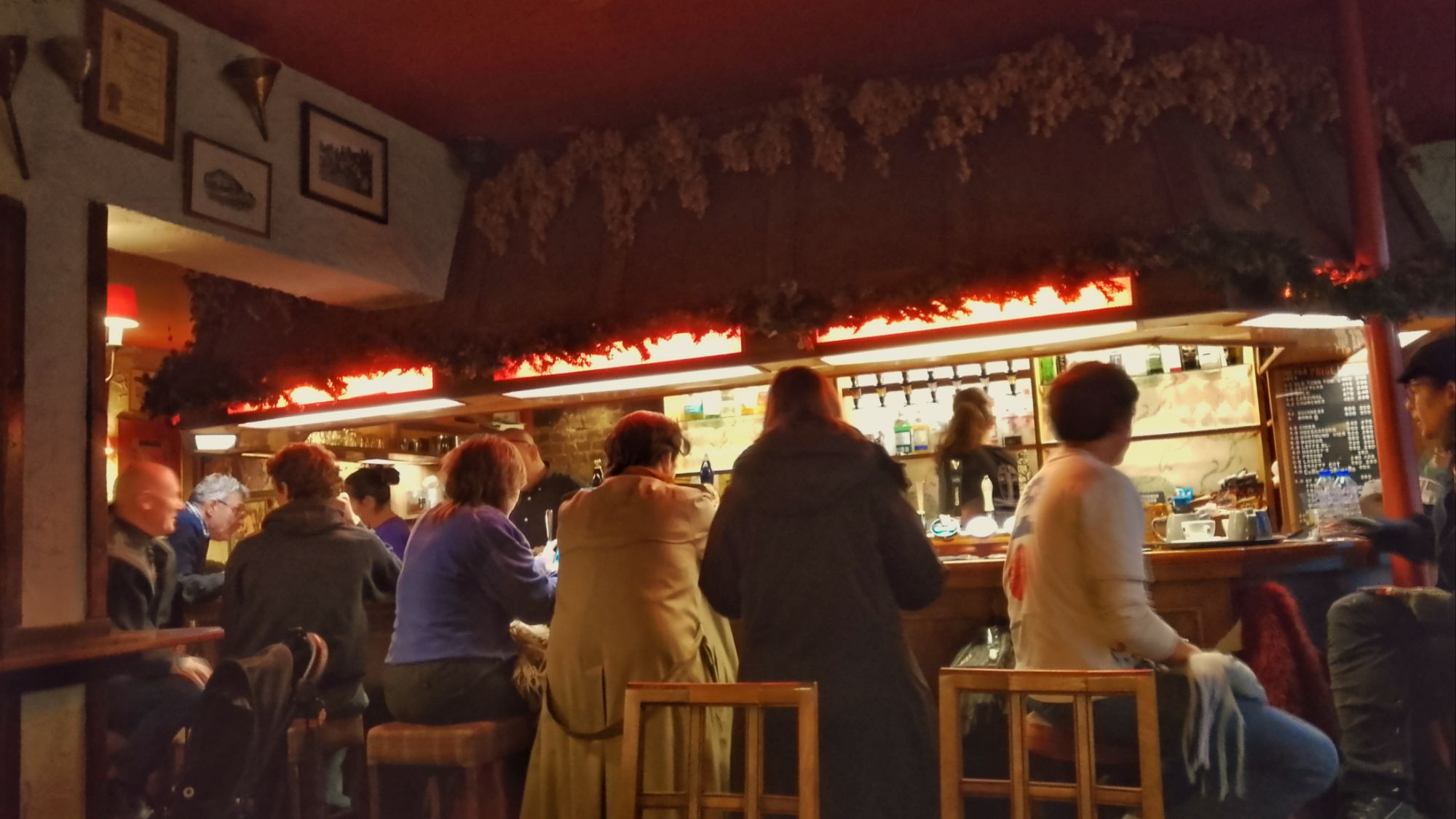
The Royal Oak is massive. It’s local, and that’s important, but the first thing to mention is it’s massive. There are three bars in an age where even two bars is a rarity – The Poolroom Bar, The Bar That Always Has The Racing On, and The Main Bar That’s Out The Back. Well, that’s what I call them, anyway. It’s massive, it’s local, and it’s old. The current building dates to 1930-odd, but there’s been a pub on the site for a lot longer, nobody really knows how long. Pubs are often considered part of the fabric of the community, but this pub really is – it was here when this part of outer London suburbia was literally all fields. You can’t really talk about the history of this part of the world, Northumberland Heath in the Borough of Bexley, without at least giving a nod to the Royal Oak.
So, it’s local. I think you have to situate every pub in its environment. It sits in what many would consider a nondescript part of London, right on the outskirts, certainly far from gentrification, a place sort of in a bind over whether it is actually even in London or really in the neighbouring county of Kent – a recurring subject for some of the most fervent and misguided discussion you’ll ever see on a Local Facebook page (the real answer is “Once was Kent, until London swallowed it up in the mid-1960s”). It is an area that wasn’t particularly well-populated until a century ago, when the builders swooped in and built lots and lots of suburban streets. My view (one I may, or may not, expand on one day) is the whole area is an area of immigrants, and a whole lot better for it. It is just that some people don’t see things how I do, that you can immigrate from Bermondsey just as much as you can from Nigeria or Poland. There aren’t many people who can go back several generations and find their ancestors lived around here. We’re all from somewhere else.
It is also an area where people love a good pub, and that for many years didn’t have many to actually love. A whole lot of old boozers for Locals and Locals Only, a fair few others with shoddy beer, even more shoddily kept, and then a few chain places that were…fine. There was the odd glimpse of What Pubs Can Be – the Robin Hood and Little John in Bexleyheath was, and is, a great pub – a little country pub dropped on a suburban street, a place that had to be excluded from the local CAMRA’s Pub of the Year voting as it kept winning, if I remember rightly.
So, a lot of people who loved pubs, but not many places that deserved that love, until the micropub revolution hit the area. In many ways Bexley was the perfect place for micropubs. The clientele were there, waiting, thirstily. There were plenty of empty shops ideal for conversion. And a wonderful local brewery emerging, Bexley Brewery, to provide the beer for those who wanted to serve something local. Down the road from the Royal Oak is the Bird and Barrel (Bexley’s Brewery’s taproom, essentially, although they serve far more than just their own beers), a genuinely special place and a real community hub. It’s not too far to venture to the Long Haul, the Kentish Belle, the Hackney Carriage, the Door Hinge and more. Bexley suddenly had a whole wealth of good places to drink, places with good beer, good company and welcoming staff. But there was still room for the old pubs to step up.
Old pubs like the Royal Oak. A place that was local, A Local.
I remember stepping in there for the first time way back in the last century, as somewhere identified as a good candidate for an underage pint. I got a Guinness with another lad. Then the rest of the bunch we were with filed in, knowing we’d been served…and just sat down without ordering anything. Rightly, understandably, the barman came over and asked us to leave. I asked him if I could finish my Guinness first and he said Yes. A true gentleman.
Until this year I think I’d only stepped back in there a handful of times. It was massive (had I mentioned that?) and a bit overwhelming. What bar were you meant to go in? Did that heavy door even work? It wasn’t especially welcoming, there wasn’t anything decent to drink and it generally felt like a pub that perhaps wasn’t for me, which was a shame, but fine. There’s always somewhere else to go.
Hazel, the manager, has written brilliantly about the realities of taking a pub on (as an actual proper journalist, that is no surprise, but it feels like a real luxury having someone so eloquent covering this kind of subject matter – a proper peek behind the curtain of what it really means to run a pub). And popping in from time to time over the last few months it has been clear that the pub is really changing for the better – a more welcoming place, with much better beer (cask back on, and good cask, well kept!), yet still true to its roots as a massive, local (capital L-Local?) pub.
It’s easy to pop into a tired pub and say it has potential, but Hazel has actually done something about it, spearheading a refurbishment inside and out – from sorting out a run-down outer building and car park to giving a very sensitive makeover inside. It is a refurbishment that feels very much in step with what I think is maybe Hazel’s philosophy to running a pub – it is sympathetic to the history of the building, a restoration rather than a refurbishment really, keeping the spirit of the place, or maybe even re-igniting it, but also making it feel like somewhere that is opening its arms to the community, the whole community. Somewhere we can all feel welcome, feel like we belong. But still fundamentally, to its very core, a Proper Boozer. And a pub that’s aware that for Proper Boozers to survive they need to be both sensitive to their past, conscious of the present and optimistic about the future.
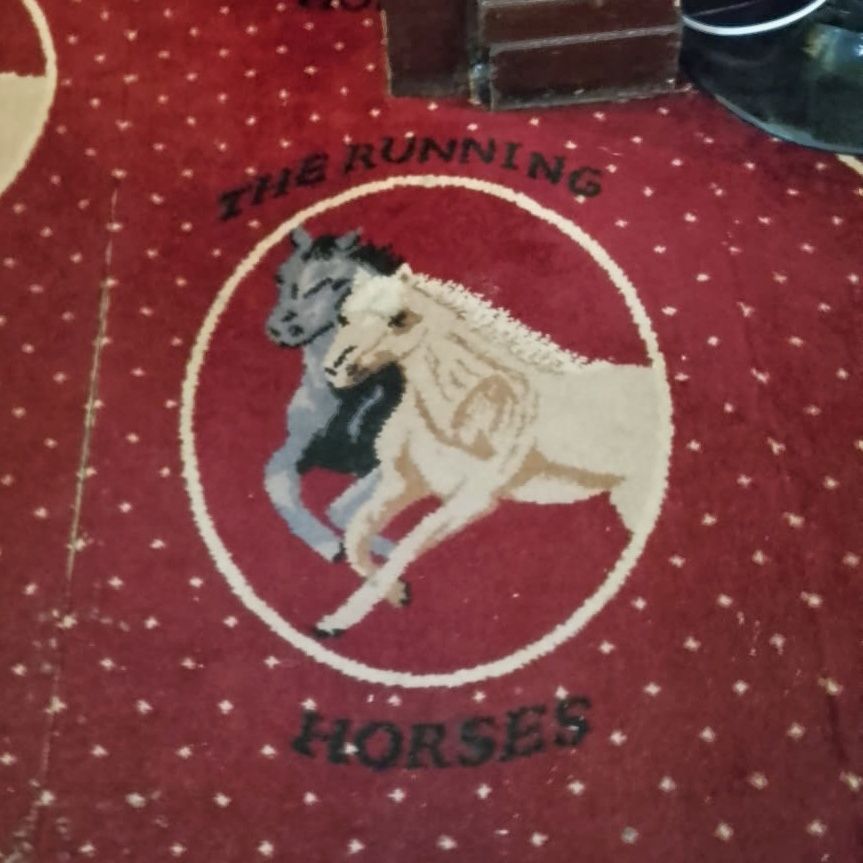
The old wood panelling inside had been revarnished, the old tat on the walls removed, the ancient carpet replaced (but with a proper pub carpet!), the paintwork doesn’t feel too modern, but in keeping with the building. A modern pub doesn’t need to have a load of exposed brick, or grey walls, or a tiled bank of craft keg taps. It just needs to look like it cares. The pub is now not just for the Regulars, but is very deliberately a place for whoever wants to cross the threshold, wherever they are from, whoever they are. And there is more on the way – a new garden, food, a community focus. It has gone from a tired relic to a real, living community space, a Public House in a very modern yet very real sense.
We need Public Houses more than ever, in our increasingly atomised and oppositional society. We need places where we can all feel like we belong, where we can escape, where we take a moment to ourselves or have a chat with others. Places to see for ourselves that we’re not all that different after all, despite what the media and politicians would like us to believe. Bexley has been fortunate to gain these kinds of places with its micropubs, and now it has a Proper Boozer taking up that mantle too.
It is a pub that finally looks like it is proud of itself, and is worth taking pride in. And for pubs to survive they need to evolve in this way, to broaden their welcome while still being true to what makes pubs amazing. And that takes some real bravery – to make people welcome but to also stop the regulars making people feel unwelcome, or to take on a refurbishment of a building that won’t yield easily to such treatment. Communities need pubs, but pubs need communities too.
Seeing the Royal Oak refurbished, restored, I felt a little choked up. I felt a real connection to the past. I looked at the old signage and wondered how many people had looked at them in the years gone by. All those people who had sat here and had a pint, over the last century or so. Here was a place countless people have loved, laughed, cried, taken refuge. And here was a place that will do all that and more for future generations. Hazel and her team are doing something very important here. They are preserving the legacy of the pub, and creating their own too.
It is enough snow to close some schools, but not others. The kind of snow a seasoned winter-ist would scoff at – just a dusting!
The kind of snow that gives a phone-in radio host the excuse to exclaim “Why can’t we cope with a bit of snow, the rest of the world can?” The kind of peculiar, contradictory exceptionalism where he sees his country as simultaneously both The Greatest Country In The World and The Worst Country In The World.
The pavements aren’t too slippery, but the snow still slows everything down. Careful, careful. It slows everything down at a time when we’re all trying to get stuff done, before the holidays, before the real slow time.
There is a wonderful uncanny light, as the whiteness of the snow bounces back into the sky. Everything looks a little off, in an intriguing, enticing way. Blues, greys, whites, play off one another. There is a stillness, quietness too.
Some trees hold the snow, others sag from it. They are all immeasurably beautiful.
After-work drinks, and I think the first of those in about three years. I had foolishly expected the bar to be quieter, and the busyness made me feel like I was stepping into my past. I feel a bit old for all this. I now prefer places quieter, less frantic.
The barman is a whirlwind, serving three people at once, glasses criss-crossing, taps pulled down and up in intricate sequences, card machines presented and withdrawn in one movement.
There’s a customer at the bar who is the fall guy for his group. He calls out his order to the barman. And as the barman presents the first drink the customer has one of his party in his ear, and he adds to his order. The next drink comes. The customer has been prompted to add again. Drink placed down. And again. Drink down. And again. He pays up. A word in his ear Then he asks for more. Pays up again. Can I now have a receipt? The barman takes a deep breath.
I’m next and I try to make my request as succinct and clear as possible. The barman looks pleased. “Finally, someone know how to order their drinks!” It’s a proud moment – I haven’t lost it!
I walk through London, make my way home. It is dark, but it is not late. I make my way past the old buildings where great writers and thinkers once lived. Now these buildings are offices, or university space. The strip-lighting that illuminates their windows gives them away.
I have also struggled with the idea that people actually live in Central London. It is unfathomable to me. It has always been a place to go to, to shop or work, not to live. But obviously many people do. I see that people live above the tube station. That seems particularly surreal. Settling at a place of movement.
There’s nowhere to buy a newspaper anymore. The train takes me home.
On the usual walk I notice that the wild kniphofia are flowering.
I’m not sure if “wild” is the right word, but they pop up each winter in the corner of a patch of grass outside the bakery. Each year I wonder about their history. How did they get there? Was there once a bigger display of plants, with bedding punctuating the grass? As it is in a far, shady corner did someone working at the bakery quietly decide to plant them one day to brighten up their workplace? Did a passerby abandon them? Whatever their story, they persevere each year, and are thankfully left by whoever mows the lawn they sit within.
The oranges and yellows feel exceptionally exotic, especially in a dark corner, on a busy road, on a very cold day. And in their way these beacons have a far deeper, profound effect than a more classic gardening display. They bring life to somewhere that lacks it, and at a time of year when we need that most. A small wonder of nature.